Variant tracks

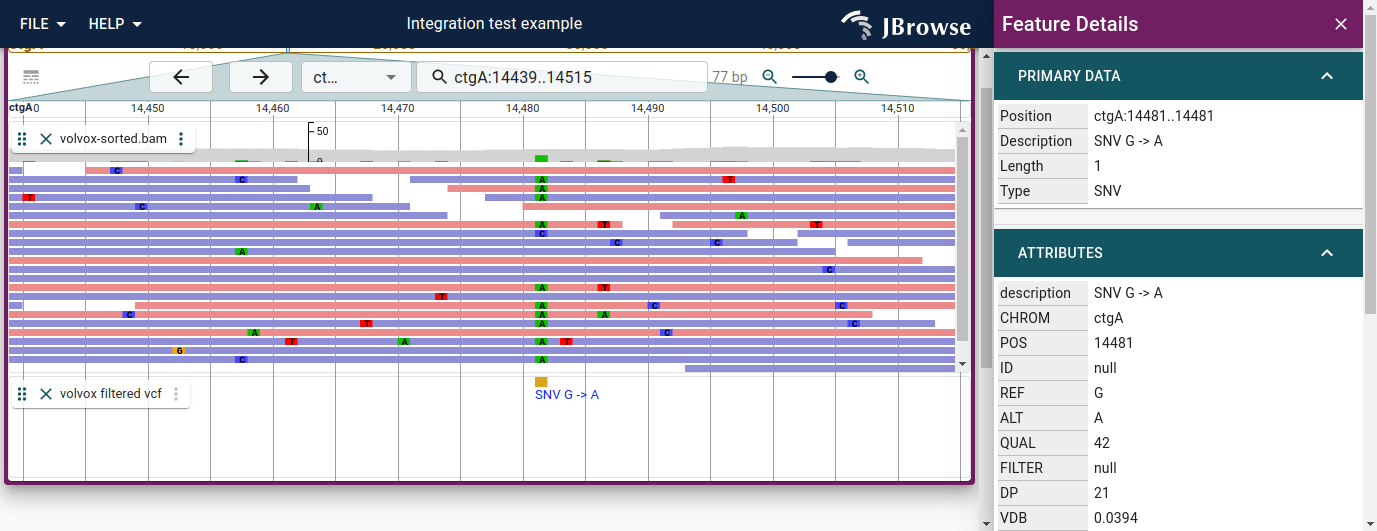
A common workflow is to view a VCF variant track alongside the alignment track that produced the calls:

Variant track indicating a SNP alongside the alignment track evidence.

Variant widget

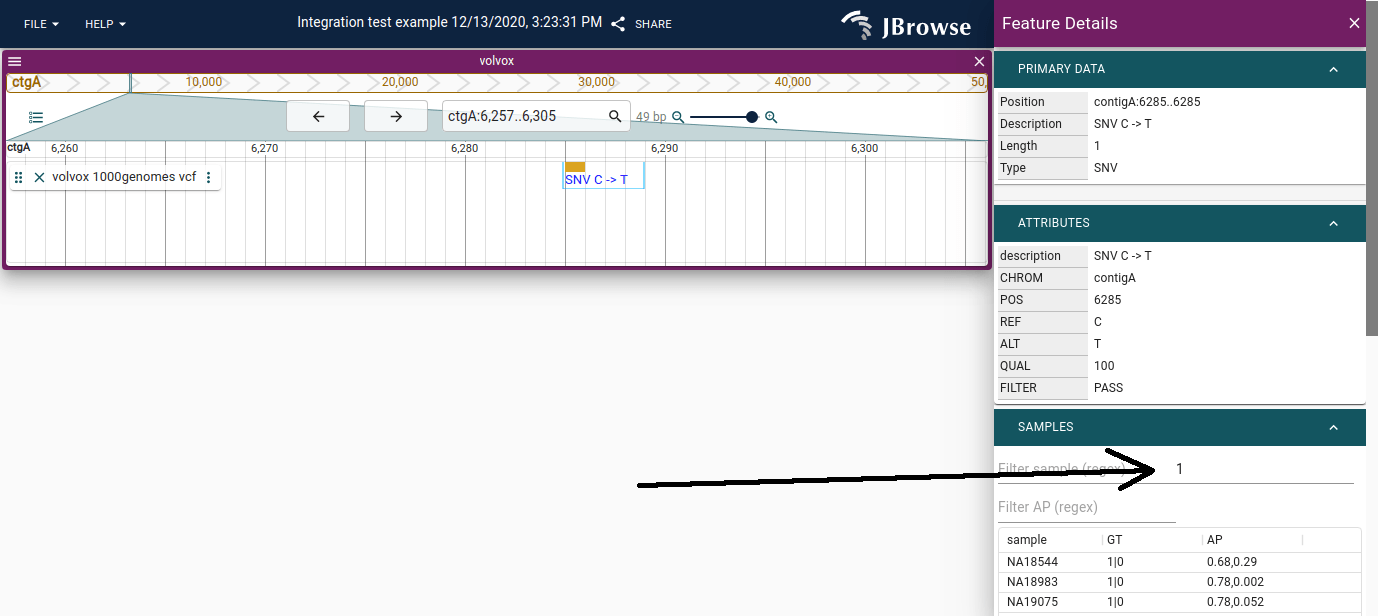
Clicking a variant opens a widget with a per-sample genotype table. Multi-sample VCFs (like 1000 Genomes) can contain thousands of samples.

Feature details panel for an SNV (C→T). The SAMPLES section lists every sample with its genotype (GT) and other per-sample fields. The 'Filter sample (regex)' field at the top of the SAMPLES section accepts a regex; typing '1' keeps only samples with the alt allele (1|0 or 0|1), hiding the many homozygous-reference rows.

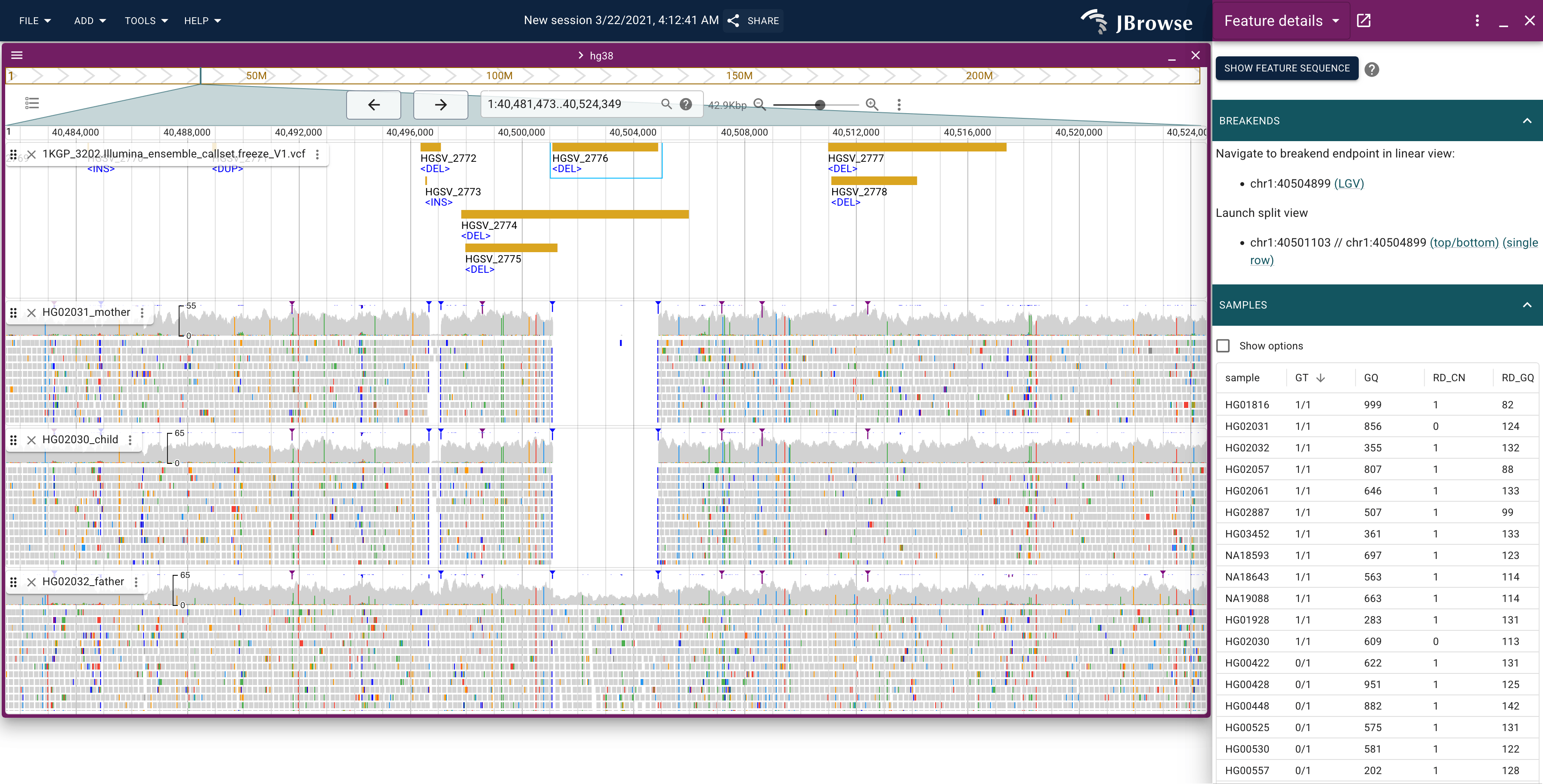
Live demo — example showing a deletion in a trio

The Variant widget can be used to filter or sort samples by genotype (GT=0 is the REF allele; any non-zero value is an ALT allele).

Multi-sample variant matrix display

The matrix display shows multi-sample VCFs as a dense heatmap where each row is a sample and each column is a variant position. This makes genotype patterns — shared variants, population structure, runs of homozygosity — visible at a glance in ways that a per-position track cannot.

Example screenshot of looking at a deletion structural variant, with alignment evidence from a mom, dad, and child (trio). The first two samples (mother, child) have complete (homozygous) deletion in this region, while the father has a heterozygous deletion. The blue markers show 'soft clipping' at the boundaries of the deletion. The right panel shows all the samples, sorted by their genotype